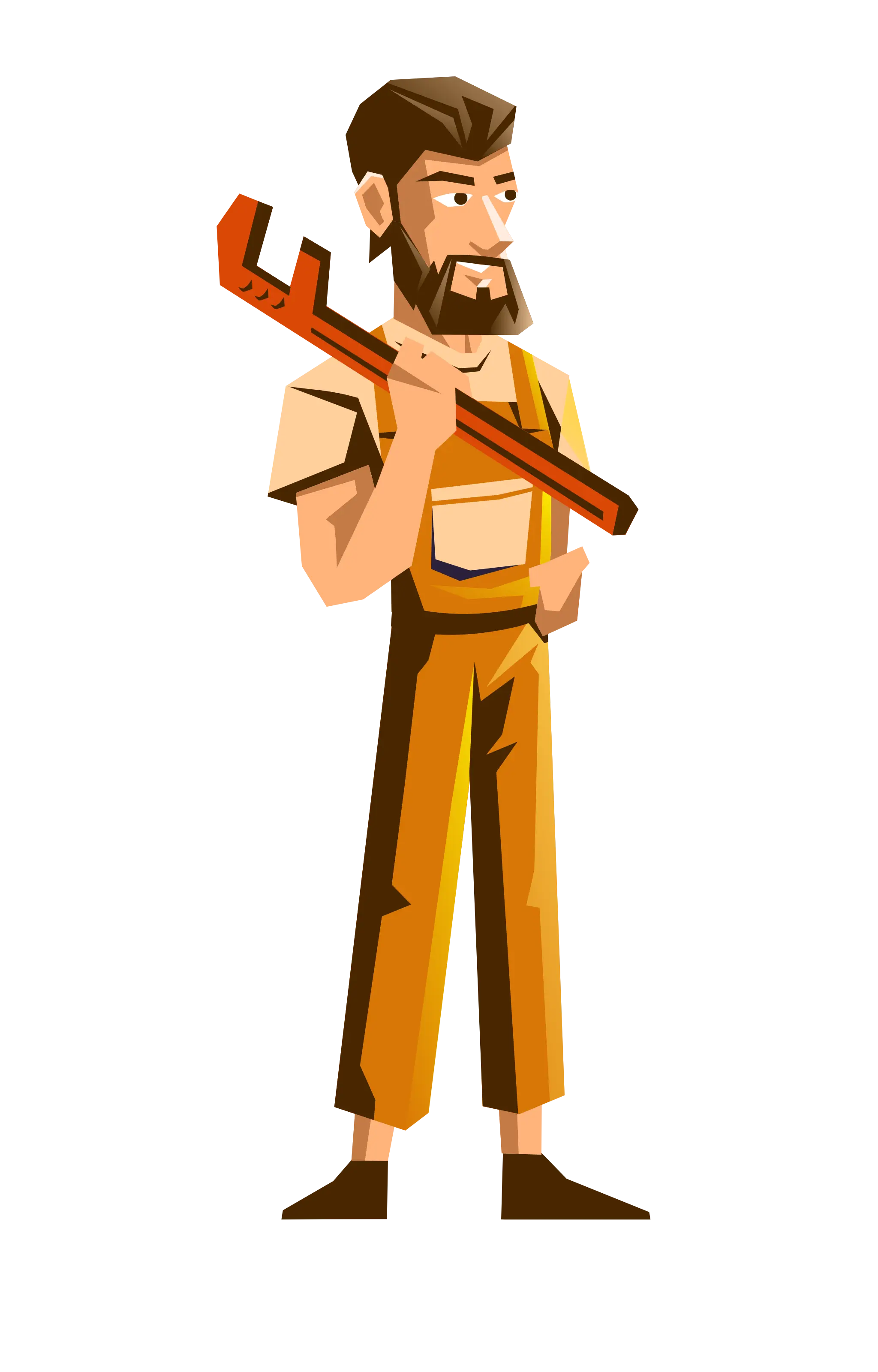
The Craftsman moves through life with a toolkit and a calm that others notice in a crisis. You are not loud about what you know. You prove it by making broken things work again, often faster than anyone expected. You prefer action to explanation and results to theory. That does not make you shallow. It makes you honest about what counts.
People often underestimate you until something goes wrong. Then you become the person everyone wants nearby. You stay cool, test options, and discard what fails without drama. In daily life you can seem detached or hard to read because you share less than you observe. Friends who know you well see a different side: dry humor, fierce loyalty, and a memory for the details that actually matter to someone.
Inside, you need room to move at your own pace. Rules that exist only on paper frustrate you. Conversations that never reach a point bore you. You would rather spend an afternoon mastering a skill than debating whether the skill is worth learning. When you commit, it is usually through steady action over time, not through speeches. Letting someone into your inner life is slow work, but once they are in, you show up in ways that do not need much translation.
The Essence
You learn by taking things apart. Systems, tools, problems: you trust your hands more than the explanation. In a crisis you are unusually useful, because while other people are still naming the problem, you are testing what fixes it. Your presence tends to be quiet, practical, and unusually effective when speed matters.
How this mind works
You think through objects and mechanisms. Abstract theory is interesting to you only as long as it predicts something specific you can verify. You move fast through the first 80% of a problem and slow down on the last 20%, because the last 20% often requires emotional context, not technical skill, and that's a different register for you.
Strengths
-
Hands-on problem solving
You learn by doing and fix by testing. Where others need a manual, you often need ten minutes with the actual object. That makes you valuable in engineering, trades, emergency repair, and any role where the answer lives in the real world, not on a slide.
-
Calm under pressure
When stakes rise, you often get steadier. Panic wastes motion, and you know it. Teams trust you in breakdowns because you focus on what can be fixed next, not on who caused the mess.
-
Resourcefulness
You work with what is in front of you. Limited tools, tight deadlines, and imperfect information do not stop you the way they stop people who need ideal conditions. You improvise without treating improvisation as failure.
-
Independent judgment
You do not need a committee to act. You gather enough data, make the call, and adjust in the field. That self-reliance keeps projects moving when leadership is vague or absent.
-
Technical curiosity
You want to know how things work, not just that they work. You take systems apart mentally and physically, which builds deep practical knowledge over time. People come to you when the obvious fix failed.
-
Economy of effort
You avoid wasted motion. You find the shortest path that actually holds. In work and in conflict, you prefer one clean move over a long performance.
Growth edges
-
Naming feelings early
You may wait until a problem is urgent before saying you are hurt, bored, or done. By then the conversation is harder. A short honest line earlier prevents bigger repairs later.
-
Staying when the fix is not enough
You are good at solving immediate breakdowns. Relationships and careers also need maintenance when nothing is on fire. Staying present through ordinary weeks is a skill, not a waste of time.
-
Sharing progress
You finish things quietly and move on. People who care about you often never hear what you built or fixed. A brief update helps them feel included and helps you receive credit you earned.
-
Tolerating process
Some environments require documentation, meetings, or slow approval. Fighting every step costs energy. Learning which bureaucracy is worth navigating protects your autonomy long term.
-
Long-range planning
You excel in the next hour and the next day. Savings, health, and skill building need calendars too. One recurring block for the future stops avoidable crises from becoming your only planning tool.
-
Emotional context as data
The last part of many problems is human, not mechanical. Asking how someone feels is not soft talk. It is information that changes whether your solution actually lands.
At work
You excel in engineering, troubleshooting, trades, and any role where hands-on problem-solving matters. You struggle in highly political or process-heavy environments. You are the person called when something is broken and needs to work again by tomorrow.
Roles that often fit
- Mechanical or electrical engineer
- Automotive, aviation, or industrial technician
- Software developer focused on systems and debugging
- Emergency responder or field medic
- Pilot, machinist, or skilled tradesperson
- Forensic or technical investigator
- Entrepreneur in product or hardware
Workplace tips
- Ask for clear problems and freedom in method, not constant status theater.
- Pair with someone who handles stakeholder communication while you own the fix.
- Document fixes you repeat so the team learns without pulling you in every time.
- Build one long-term skill on a schedule, not only when something breaks.
In relationships
You show love through quiet presence and practical help — fixing what's broken, showing up when it counts. Partners value your competence but may want more emotional expression. Your deepest connections form when you let someone in without waiting for a crisis to justify it.
Friendships
Your friendships run on shared activity more than long talks. You show up by helping, fixing, or doing something side by side. Your circle may be small, but it is solid. You remember who was useful in a pinch and who respected your space. Loyalty, for you, is practical and quiet.
Under pressure
Stress makes you want space. You go quiet, you withdraw from the social layer, and you return to something you can fix with your hands. People close to you sometimes read this as leaving them; what you are actually doing is regulating through autonomy. You re-enter on your own timeline, usually with something concrete to contribute.
Recovery that works
- Work with your hands: build, repair, ride, or train without an audience.
- Leave the conversation. A solo walk or drive beats arguing while overloaded.
- Limit input for one hour: no messages, no new tasks, no debate.
- Fix one small concrete thing. Closing a loop restores a sense of control.
Your growth path
You stay in a relationship or a project past the point a tactical fix would end your involvement. You express what you feel without waiting for the feeling to become critical. You commit to one long-term goal that is not a problem to be solved but a practice to be built.
Communication style
You prefer short, direct exchanges with a clear point. You respect people who say what they need and let you respond in your own time. Long emotional monologues or vague requests drain you. When you care, you often express it through action instead of words, so partners may need to learn your language. Lead with the problem, not the preamble. Give you space to think before demanding an instant answer. Do not mistake silence for indifference; you are often working the issue internally.
Compatible types
- ESFJ The Provider
Brings warmth, structure, and social awareness you may skip. You bring calm competence and practical fixes when life gets messy.
- ESTJ The Supervisor
Shares respect for results and direct action. Helps you commit to timelines; you help them adapt when the plan hits real-world friction.
- ISFJ The Protector
Offers steady care and attention to detail. You offer protection through capability; they help you notice emotional needs before they become crises.
Common mistypes
Often confused with: ISTJ, INTP, ESTP
Often confused with ISTJ (more rule-bound and duty-focused), INTP (more theory and less hands-on), or ESTP (more social momentum and less private withdrawal). If you would rather fix the machine than explain yourself at the meeting, Craftsman fits more than Logistician, Logician, or Dynamo.
Grow with INNERO
For Craftsmen: turn practical skill into steady follow-through.
Your personality type stays. Your habits and traits can improve.
Take the free test, discover your profile, and start your growth path with smart daily suggestions, habit tracking, lessons, and 14-trait progress in the app.
- Smart suggestions matched to your profile
- Habit tracking with streaks and daily progress
- Lessons and practical methods across focus, discipline, stress, and more
- 14-trait tracking so you see what is actually improving
Premium unlocks the full growth system: deeper insights, unlimited suggestions, and premium lessons. Not a longer report. The engine that helps you act on what you already understand.